


Countries can navigate away from aid dependency to a new era of sustainable self-reliance, based on domestic resources.
You have full access to this article via your institution.


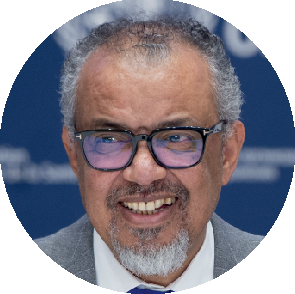
Credit: WHO
Since the World Health Organization (WHO) was founded, in 1948, the world has seen tremendous improvements in global health. Life expectancy has increased from 46 to 73 years, with the greatest gains in the poorest countries. Smallpox has been eradicated and polio is on the brink.
In the past 50 years, thanks in large part to the WHO’s Expanded Programme on Immunization, childhood immunization has jumped from 5% to 83%, which has saved an estimated 154 million lives. Just in the past 25 years, deaths from HIV have dropped by two-thirds, deaths from malaria by one-third and deaths from tuberculosis by half. Maternal mortality has fallen by 40%; child mortality has more than halved; and tobacco use has dropped by 40%. In the past 10 years, new vaccines have been approved against Ebola and malaria.
Of course, the WHO cannot claim sole credit for any of these achievements. They are the result of the collective effort of governments and communities, supported by an array of partners and donors and fuelled by advances in research.
These historic gains — and the opportunity to drive further progress — are now at risk from an unprecedented crisis in global health financing. International aid is estimated to have dropped by up to 40% in 2025 (as compared with 2023), which caused severe disruption to health systems and services, job losses for health and care workers, and critical shortages in medicines and health products. These cuts are hitting the lowest-income countries — where approximately one quarter of health spending comes from external sources — the hardest.
Aid reductions have been the catalyst for this crisis, but they did not create it: they exposed and amplified long-standing structural vulnerabilities in the complex and fragmented global health architecture, and in how countries finance their health systems.
At the same time, mounting debt-servicing costs have restricted the ability of countries to invest in health; many countries spend more on debt interest payments than on education and health combined. Africa also loses more to illicit financial flows and corporate tax exemptions than it gains in aid.
The vulnerabilities created by the aid model — and the solutions to it — were well known. In 2019, leaders of the African Union’s 55 member states, under the leadership of Rwanda, committed to increasing domestic financing to achieve universal health coverage in the Africa Leadership Meeting. This was followed in 2023 by the Lusaka Agenda, which outlined five strategic shifts for evolving global health initiatives and the global health financing ecosystem. Still, as long as the aid continued to flow, there were few incentives for transitioning away from it.
Nevertheless, the current funding crisis also presents an opportunity for countries to navigate away from aid dependency to a new era of sustainable self-reliance, based on domestic resources. Although many countries will continue to need aid, it is essential that aid serves to strengthen national health systems and boost national capabilities.
The WHO is supporting countries to make that transition. In the short term, we are supporting them to develop affordable essential health benefit packages; introduce or increase health taxes on tobacco, alcohol and sugary drinks; strengthen pooled procurement and domestic manufacturing; integrate donor-funded vertical programmes into government-led systems based on primary health care; and to improve budget execution using digital financial management systems.
In the longer term, countries can strengthen risk-sharing mechanisms to improve financial protection, including through publicly financed health insurance.
The WHO has also been affected by cuts to global aid. The announcement by the USA in January 2025 that it intends to withdraw from the organization has resulted in a substantial reduction of our global workforce.
Of course, every country is within its rights to decide how it spends its money, but the loss of life and disruption to health services caused by the abrupt cuts to aid could have been prevented with more warning, and more time to transition.
Again, this was a crisis long in the making. Beginning in the 1980s, the WHO has relied increasingly on voluntary contributions from a handful of donors, most of which come tightly earmarked for specific projects or programmes. By 2022, 86% of our income came from such contributions, and only 14% came from assessed contributions (the membership fees that countries pay).
That year, the WHO’s member states agreed to increase assessed contributions progressively to 50% of the base budget. The first increase happened in 2023, the second in 2025, and a further three are planned for 2027, 2029 and 2031. The significance of this historic decision cannot be overstated: it is a long-term strategic solution that addresses one of the WHO’s main systemic weaknesses, and will make it more sustainable, resilient and independent.
Einstein said, “In the middle of adversity there is great opportunity”. The disruption to health systems and services caused by sudden and steep cuts to global health financing are serious and must be addressed, but they also offer countries and the global health community at large an opportunity to re-evaluate, reset and re-emerge stronger, leaner and more focused on delivering better health for the world’s people.
link