6 Health Issues We’re Watching in 2026 | Project HOPE
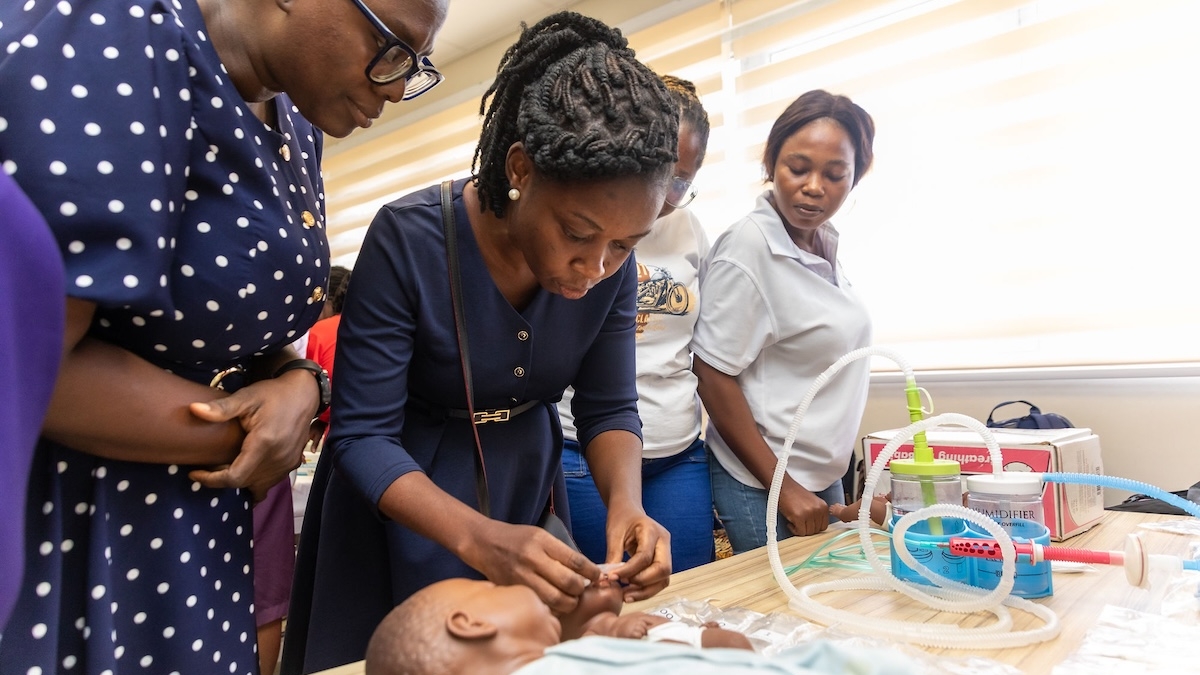
Health systems worldwide are facing unprecedented strain, buckling under the pressures of conflict, displacement, and disease.
Despite these compounding challenges, Project HOPE touched more lives than ever in the past year, helping health workers save lives and address the unique needs of their communities. We reached more than 5 million people, provided direct medical services to more than 3.4 million patients, screened 1.2 million people for disease, and donated $82.8 million in essential equipment, medicines, and medical supplies.
This year, our focus will remain fixed on addressing the world’s most urgent health challenges — closing gaps in care, reducing vulnerabilities, and tackling emerging threats.
From antimicrobial resistance to rising mental health needs, we asked our team of technical experts to share what issues they’re watching most closely in 2026.
1. Rising Conflict, Displacement, and Health System Fragmentation
Dr. Rondi Anderson
Senior Technical Advisor, RMNCH
The number of armed conflicts has reached its highest level in three decades, driving unprecedented displacement and placing immense strain on fragile health systems. Conflicts and natural disasters damage infrastructure, disrupt supply chains, and force health workers to flee, reducing access to essential services.
Fragmentation — caused by damaged infrastructure, weakened governance, and disrupted referral systems — further limits the continuity and quality of services.
As crises become more prolonged and complex, health facilities face chronic shortages of medicines, electricity, and personnel, while displaced populations often settle in overcrowded, resource-poor environments where access to care is severely restricted. Health indicators deteriorate rapidly in such settings, with preventable conditions worsening due to delayed or absent services and underserved populations at heightened risk, particularly women and children.
As the number of forcibly displaced people surpasses 117 million globally, more women are becoming pregnant in such unstable, resource-constrained environments. The implications are serious: Evidence shows that maternal and neonatal mortality in conflict-affected countries can be more than double global averages.
Evidence shows that maternal and neonatal mortality in conflict-affected countries can be more than double global averages.
Without a strong response, these health outcomes and inequities will continue to widen. Project HOPE responds to humanitarian crises by placing women in the center of primary health care. By doing so, the needs of women and children are addressed, helping reduce the burden of morbidity and mortality.

2. Life-Threatening Vaccination Gaps and Outbreak Risks
Dr. Endalkachew Melese
Senior Technical Director, Infectious Diseases
Global immunization efforts — long recognized by the World Health Organization and UNICEF as among the most cost-effective public health investments — are under increasing strain. Misinformation, population growth, humanitarian crises, and declining funding are widening immunity gaps, placing millions of children, adolescents, and adults at risk. As these pressures intensify, decades of progress are beginning to unravel, and vaccine-preventable diseases are resurging worldwide.
Measles, one of the world’s most contagious viruses, has made a particularly dangerous comeback: an estimated 10.3 million cases occurred in 2023 — a 20% increase from 2022 — reflecting declines in routine immunization following the Covid-19 pandemic. Meningitis and yellow fever are also resurging, particularly in Africa, reversing years of progress.
At the same time, global immunization coverage has stagnated or slipped backwards. Although 131 countries have maintained at least 90% coverage for the first dose of DTP (diphtheria, tetanus, and pertussis) vaccination since 2019, only 17 countries with lower baseline coverage have improved. Coverage has worsened in 47 countries, including several upper-middle- and high-income nations that previously sustained robust immunization systems.
Global immunization coverage has stagnated or slipped backwards.
In 2024, 14.3 million children missed out on vaccinations — up from 13.9 million in 2022 — and 5.6 million were only partially vaccinated. More than half of these children live in fragile or conflict-affected contexts. Protecting global health security now requires urgent action to strengthen disease surveillance and ensure every child is reached with lifesaving vaccines.
In 2026, Project HOPE will focus on closing immunization gaps and preventing outbreaks, particularly in fragile and conflict-affected settings. We will prioritize zero-dose and under-immunized communities through data-driven microplanning and expanded last-mile delivery, including outreach and mobile services. We will also strengthen routine immunization systems by improving cold chain reliability, supply management, immunization information systems, health workforce capacity, and disease surveillance, enabling rapid response and targeted vaccination.
3. Surging Mental Health and Psychosocial Support Needs
Pamela Londoño Salazar
Mental Health Advisor
Mental health conditions remain widespread, misunderstood, and significantly undertreated, while the services needed to address them remain under-resourced. More than 1 billion people worldwide are living with mental health conditions, with anxiety and depression among the most prevalent and leading contributors to disease and disability. Suicide continues to be a leading cause of death, particularly among young people, underscoring the urgent need for prevention, early identification, and timely intervention.
As we look toward 2026, mental health and psychosocial support (MHPSS) must remain central to global health agendas. While many countries have strengthened mental health policies and strategic planning, most health systems still fall short of meeting population needs. Expanding accessible, culturally appropriate, community-based, and person-centered MHPSS services will be essential to shifting away from the institutionally-focused models embedded in communities. Integrating mental health into schools and primary care will be key to reducing treatment gaps.
More than 1 billion people worldwide are living with mental health conditions, with anxiety and depression among the most prevalent and leading contributors to disease and disability.
Investing in workforce development — including training in psychological first aid, trauma-informed care, and self-care — will also be essential to building more resilient health systems. Digital mental health and tele-mental health can help extend reach, particularly in underserved communities, if implemented thoughtfully.
Finally, strengthening MHPSS responses in emergencies, climate-related disasters, and humanitarian contexts will remain a priority in 2026, reinforcing Project HOPE’s commitment to providing rapid responses and relief while supporting integrated and resilient health systems.
4. Global Maternal and Adolescent Health Regression
Dr. Rondi Anderson
Senior Technical Advisor, RMNCH
Global gains in maternal and adolescent health are regressing or stagnating in several regions, eroding years of progress.
Global maternal deaths reached approximately 260,000 in 2023 — equivalent to one woman dying every two minutes — and there were 197 maternal deaths per 100,000 live births. Although maternal mortality dropped by roughly 40% between 2000 and 2023, progress has slowed considerably since 2016 and even reversed in some regions. Between 2016 and 2023, 16 countries, including the United States, Venezuela, Dominican Republic, and Jamaica, experienced increases in maternal mortality.
Adolescent health also shows worrying patterns. Although the global adolescent birth rate declined from 64.5 births per 1,000 girls aged 15–19 in 2000 to about 41.3 in 2023, progress has been uneven. Sub‑Saharan Africa and Latin America and the Caribbean report the highest adolescent birth rates globally: 97.9 and 51.4 births per 1,000 adolescents, respectively. Mali, Niger, and Angola have the highest national rates, with 203, 176, and 165 births per 1,000 adolescents.
Between 2016 and 2023, 16 countries, including the United States, Venezuela, Dominican Republic, and Jamaica, experienced increases in maternal mortality.
Regional declines or stagnations highlight growing inequities, underscoring the urgent need for investment in health systems and targeted interventions for women and adolescents.
Project HOPE ensures that the needs of adolescents and youth are at the forefront of all projects and programs. We address the comprehensive health needs including sexual and reproductive health education and services, menstrual hygiene, and mental health, to support confident transitions to adulthood.
5. Increased Threat of Antimicrobial Resistance (AMR)
Dr. Endalkachew Melese
Senior Technical Director, Infectious Diseases
Antimicrobial resistance (AMR) — the ability of microorganisms to resist treatments that were once effective against them — has emerged as one of the most urgent global health threats. In 2021, AMR was linked to 4.7 million deaths worldwide, including over 1.1 million deaths directly caused by drug-resistant infections. Without urgent action, AMR could rival cancer as a leading cause of mortality by 2050, with projected annual fatalities reaching 10 million.
The burden of AMR falls disproportionally on low- and middle-income countries, where fragile health systems and limited access to clean water, sanitation, and effective antibiotics create conditions for resistant infections to spread. Young children, older adults, and individuals with weakened immune systems are especially vulnerable.
A small group of pathogens account for nearly three-quarters of all AMR-related deaths, while rising resistance to some of the last-effective antibiotics poses an escalating challenge.
Without urgent action, AMR could rival cancer as a leading cause of mortality by 2050.
Misuse of antibiotics in humans, animals, and plants continues to accelerate resistance, compounded by globalization, migration, and climate change. Left unchecked, AMR jeopardizes the progress of modern medicine and global food security, with the World Bank estimating up to $1 trillion in additional health care costs and $1 trillion to $3.4 trillion in annual GDP losses by 2030.
Yet solutions do exist. Strengthening surveillance, improving antibiotic stewardship, preventing infections, and investing in new diagnostics, treatments, and vaccines is critical. Addressing AMR requires a One Health approach — a unified effort to balance and optimize the health of people, animals, and ecosystems.
The time to act is now — before the world enters a true post-antibiotic era.
6. Global Health Workforce Crisis Reaching a Tipping Point
Dr. Uche Ralph-Opara
Chief Health Officer
The pressure on the people who hold health systems together is becoming impossible to ignore. McKinsey Health Institute estimates that by 2030, global health systems could face a shortfall of at least 10 million health workers, driven by rising demand and structural workforce constraints. These figures reflect lived realities on the ground, an overstretched workforce navigating growing complexity with limited support.
Climate shocks, conflicts, population movements, and rising burdens of noncommunicable diseases are all increasing the demand for care. At the same time, unsafe working conditions, limited support, and chronic stress are driving many health workers away from the profession altogether. The World Health Organization has noted that countries with persistent workforce shortages experience declining service quality and widening inequities in access to essential care.
Unsafe working conditions, limited support, and chronic stress are driving many health workers away from the profession altogether.
At Project HOPE, this challenge sits at the center of our mission. We are deeply invested in helping countries train, support, and retain their workforce through clinical and digital learning, mentorship, and mental health support for frontline teams. The path to stronger health systems begins with stronger support for the people who power them.
link